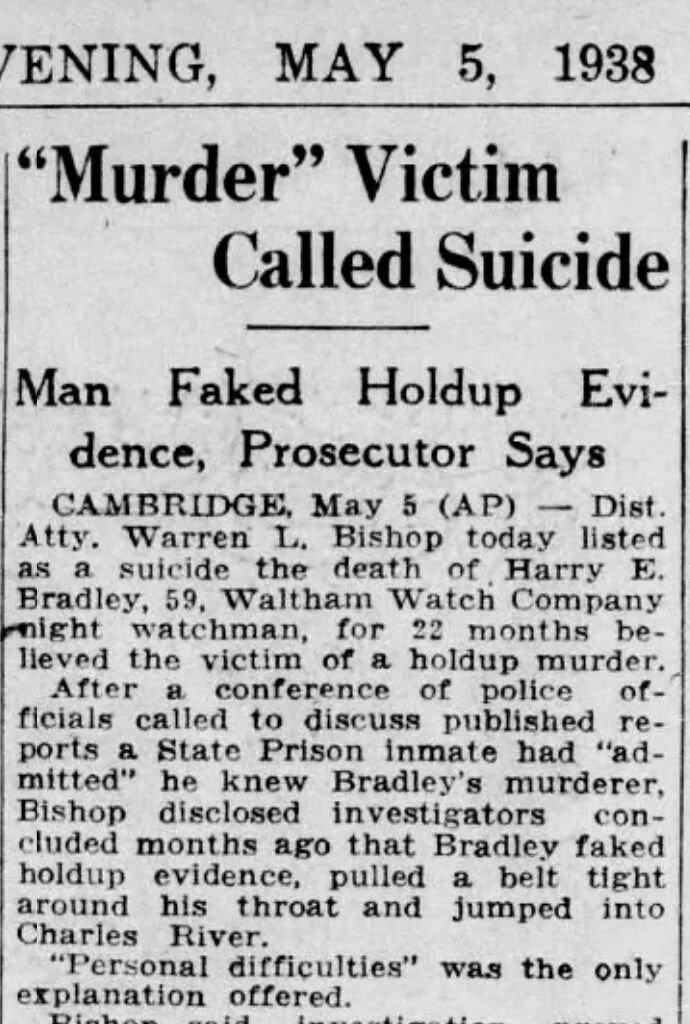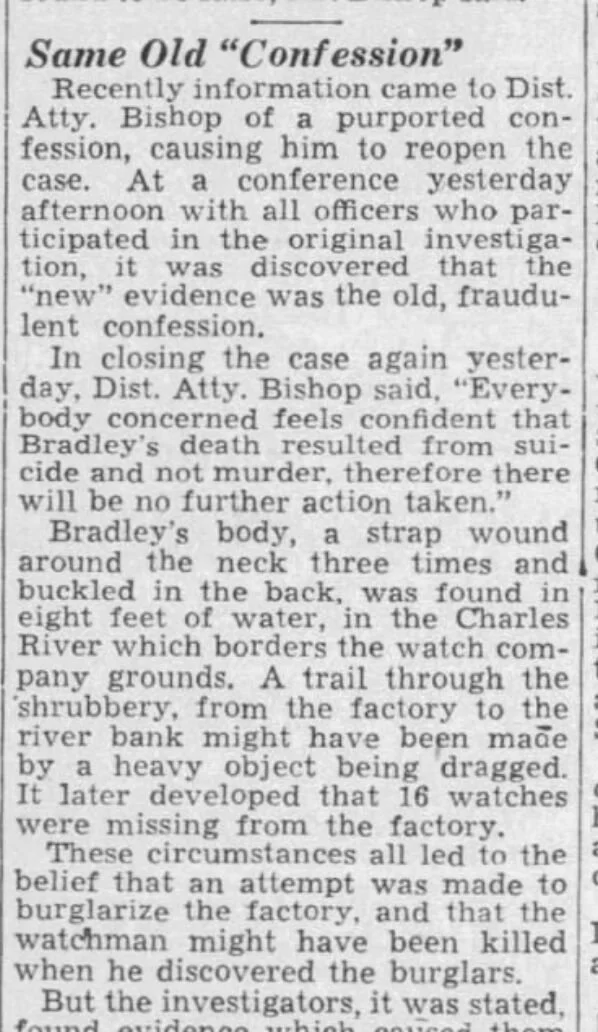
The CONCLUSION of the mysterious happenings at the Waltham Watch Factory on the night of July 12, 1936.
/DISCLAIMER: If you or someone you know is experiencing suicidal thoughts or a crisis, please reach out immediately to the Suicide Prevention Lifeline at 800-273-8255 or text HOME to the Crisis Text Line at 741741. These services are free and confidential.
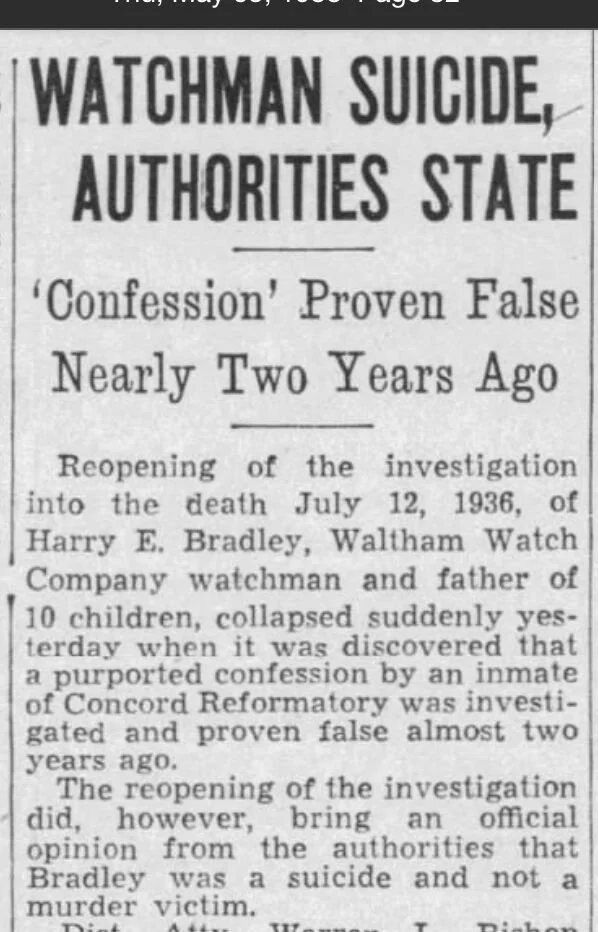
The conclusion of the mysterious happenings at the Waltham Watch factory on the night of July 12, 1936.
Night watchman Harry E. Bradley's body was found the morning after his shift, in the Charles River behind Waltham's storied watch factory building on Crescent Street.
Clues were followed, potential suspects questioned, and there was even a report of a prison inmate confessing. But nothing that led to a satisfying solution to the mystery.
On May 4, 1938, newspapers reported the confession as something known to police, and the feeling was that the killer or killers would be brought to justice soon.
Middlesex District Attorney Warren Bishop put that to rest quickly when he announced something police had perhaps suspected all along. From The Boston Globe of May 5, 1936:
"Recently information came to Dist. Atty. Bishop of a purported confession, causing him to reopen the case. At a conference yesterday afternoon with all officers who participated in the original investigation, it was discovered that the "new evidence was the old, fraudulent confession.
In closing the case again yesterday, Dist. Atty. Bishop said, "Everybody concerned feels confident that Bradley's death resulted from suicide and not murder, therefore there will be no further action taken."
A sad case. But if the police and DA knew the confession was fake and that the crime was most likely a suicide, why not share that?
According to the DA, "because of the possible effect on others." This is a time when the stigma was even stronger than it is now. The DA just offered "personal difficulties" as the only motive.
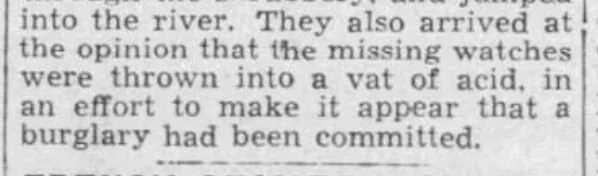
Other details in press reports still don't quite make sense.
That Bradley put the strap around his neck, shot off one round from his service revolver, walked down, and threw himself into the river. And this wild detail thrown in at the very end of the article:
"They also arrived at the opinion that the missing watches were thrown into a vat of acid, in an effort to make it appear that a burglary had been committed."
Um, what?
What acid can make it appear to be a burglary? How? Why?
What about the pile of banjo clocks in the loading dock, and the 16 missing pocket watches - that were mentioned once again in this final article?
No further explanation or evidence was offered.
Bradley's resting place is at Mt. Feake Cemetery in Waltham, within sight of the Waltham Watch Company factory building, now mostly condos.