New Exhibit:
June 2026 through April 2027
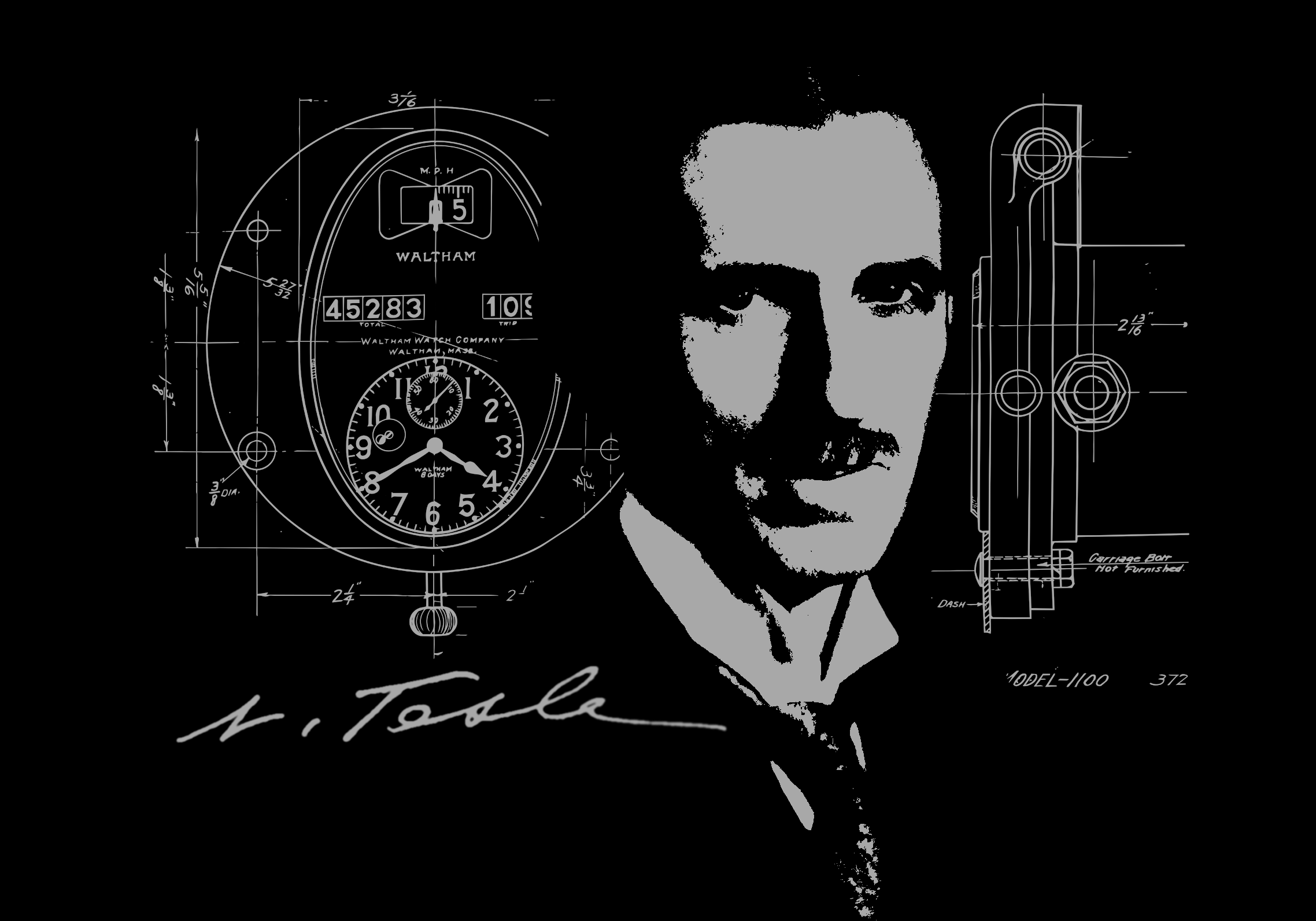
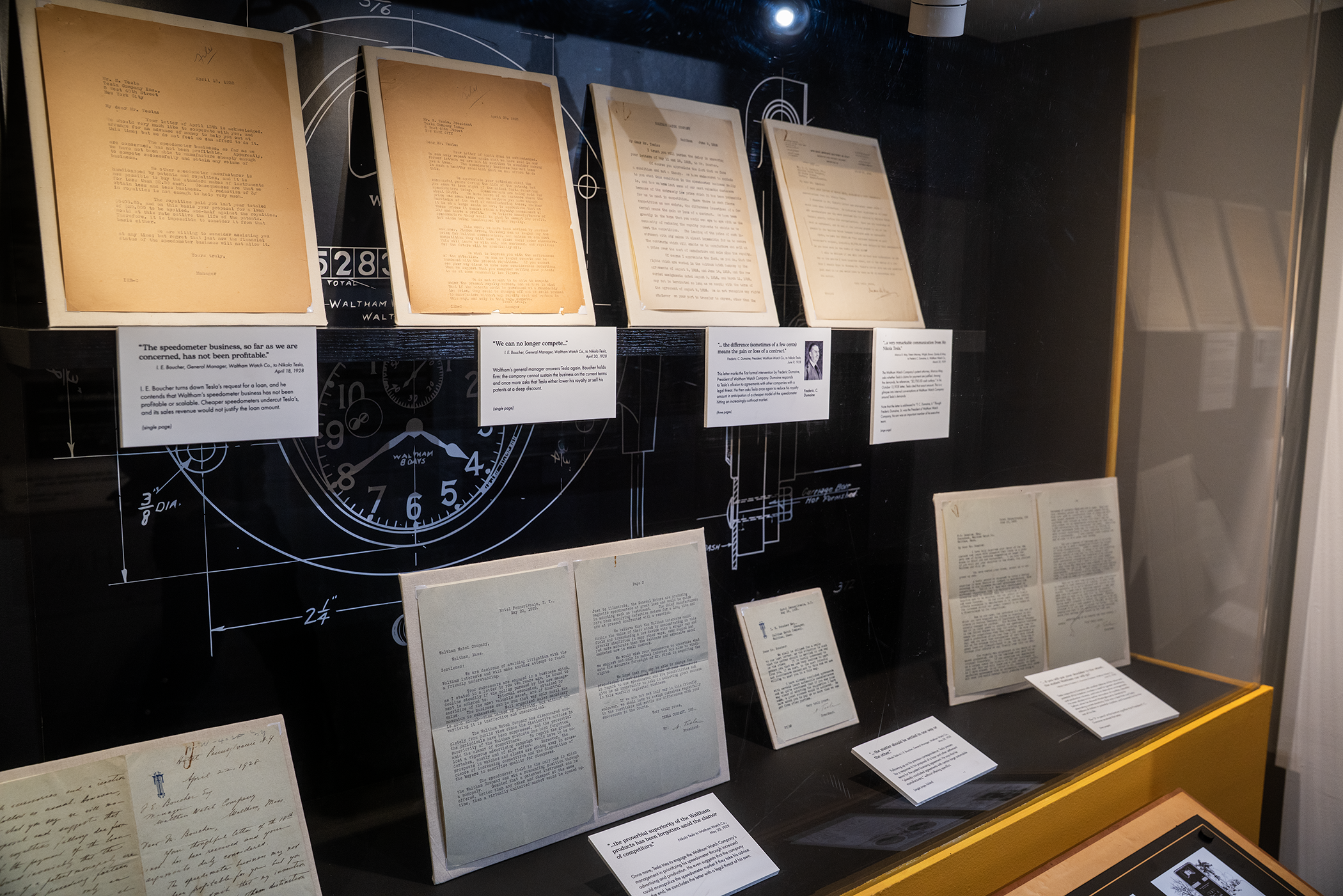
This exhibition centers on the Charles River Museum’s archive of correspondence between the
Waltham Watch Company and Nikola Tesla concerning his speedometer.
None of this has ever been shared with the public before.
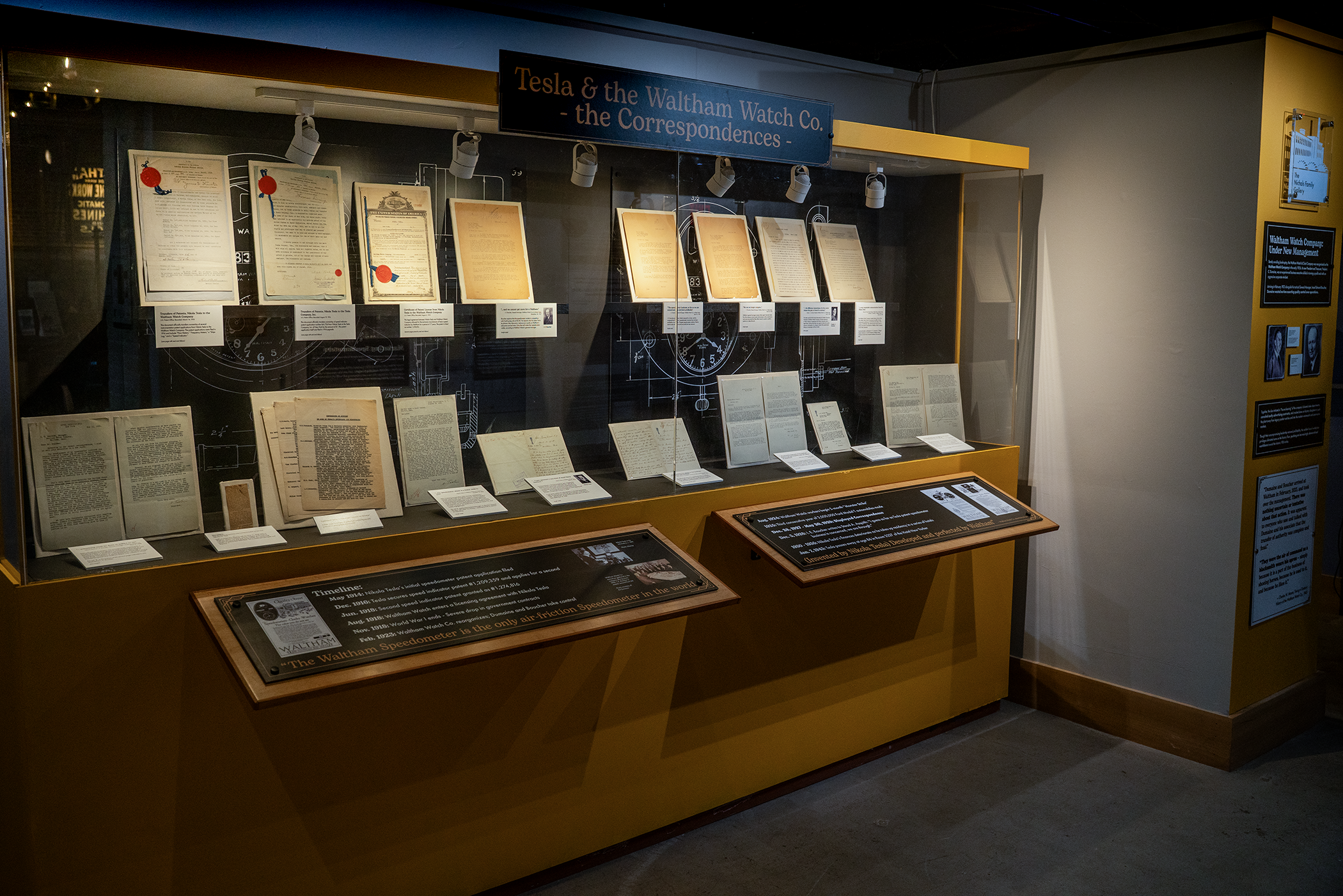
On display are Tesla's original handwritten letters to I. E. Boucher and Frederic C. Dumaine, Sr., respectively the Manager and President of the Waltham Watch Company, and their replies, providing a unique insight into the business dealings between one of the most celebrated inventors of the Twentieth Century and one of the most innovative of American manufacturing companies.
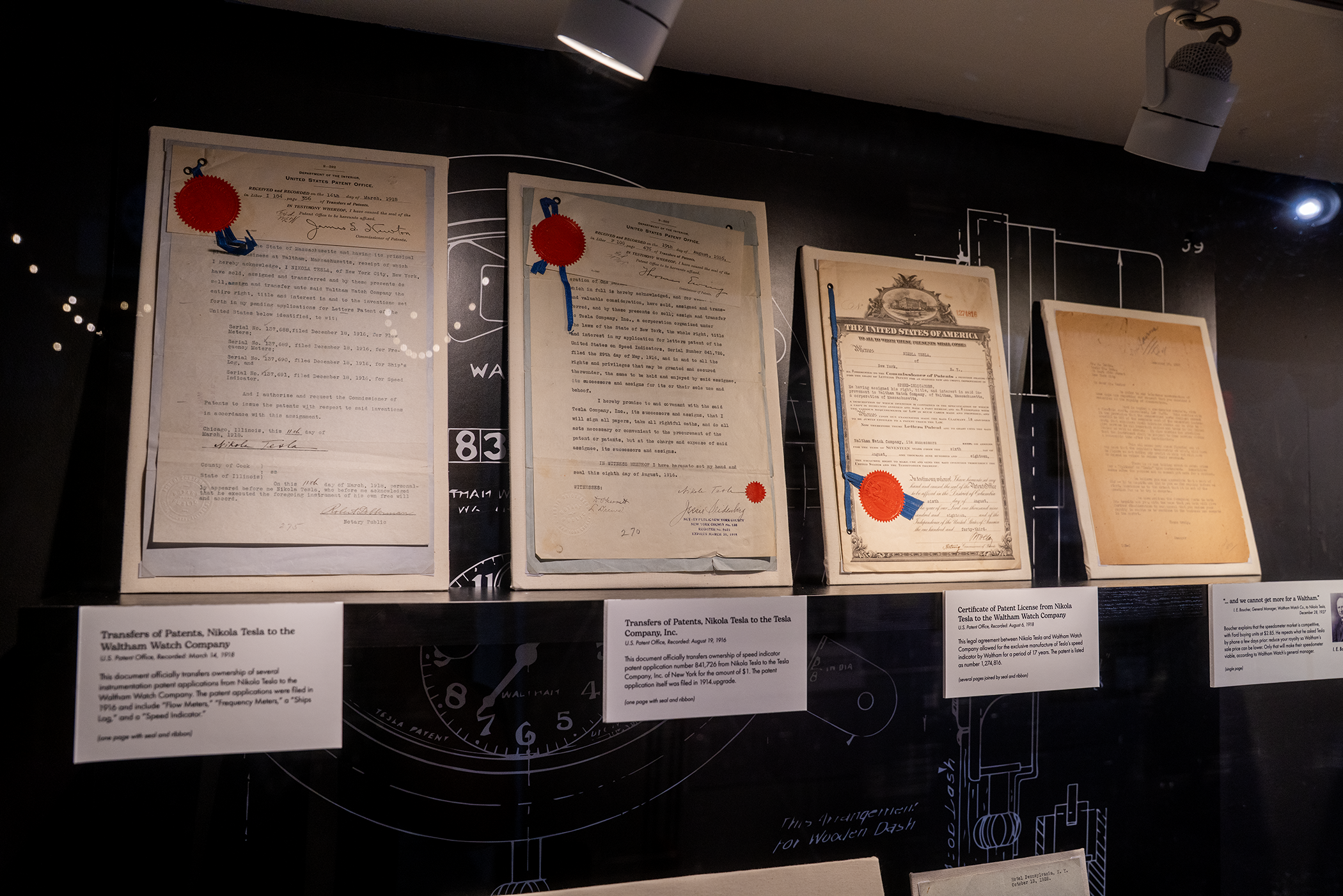
Original patent transfers and other business papers are also part of this landmark collection.
The Players:
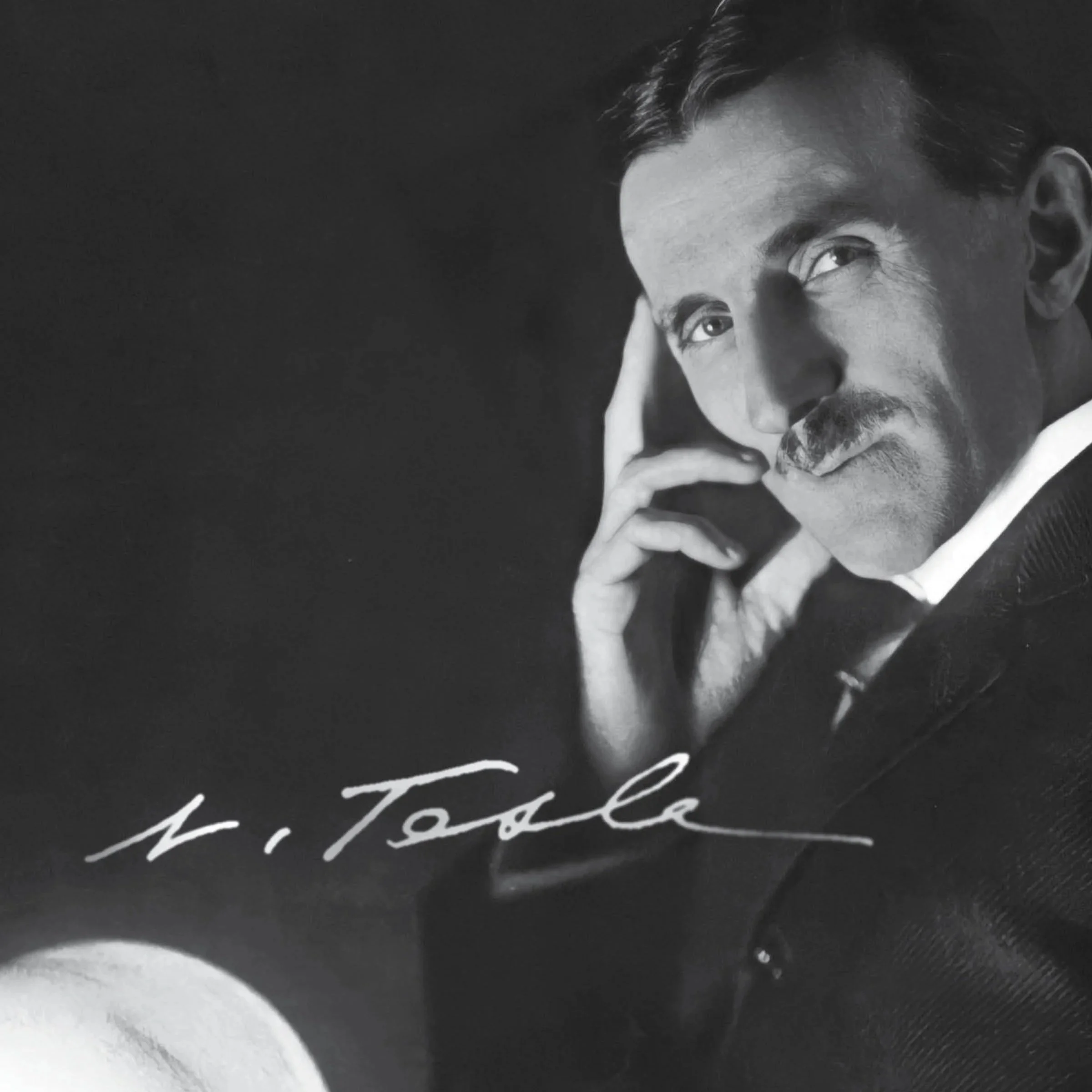
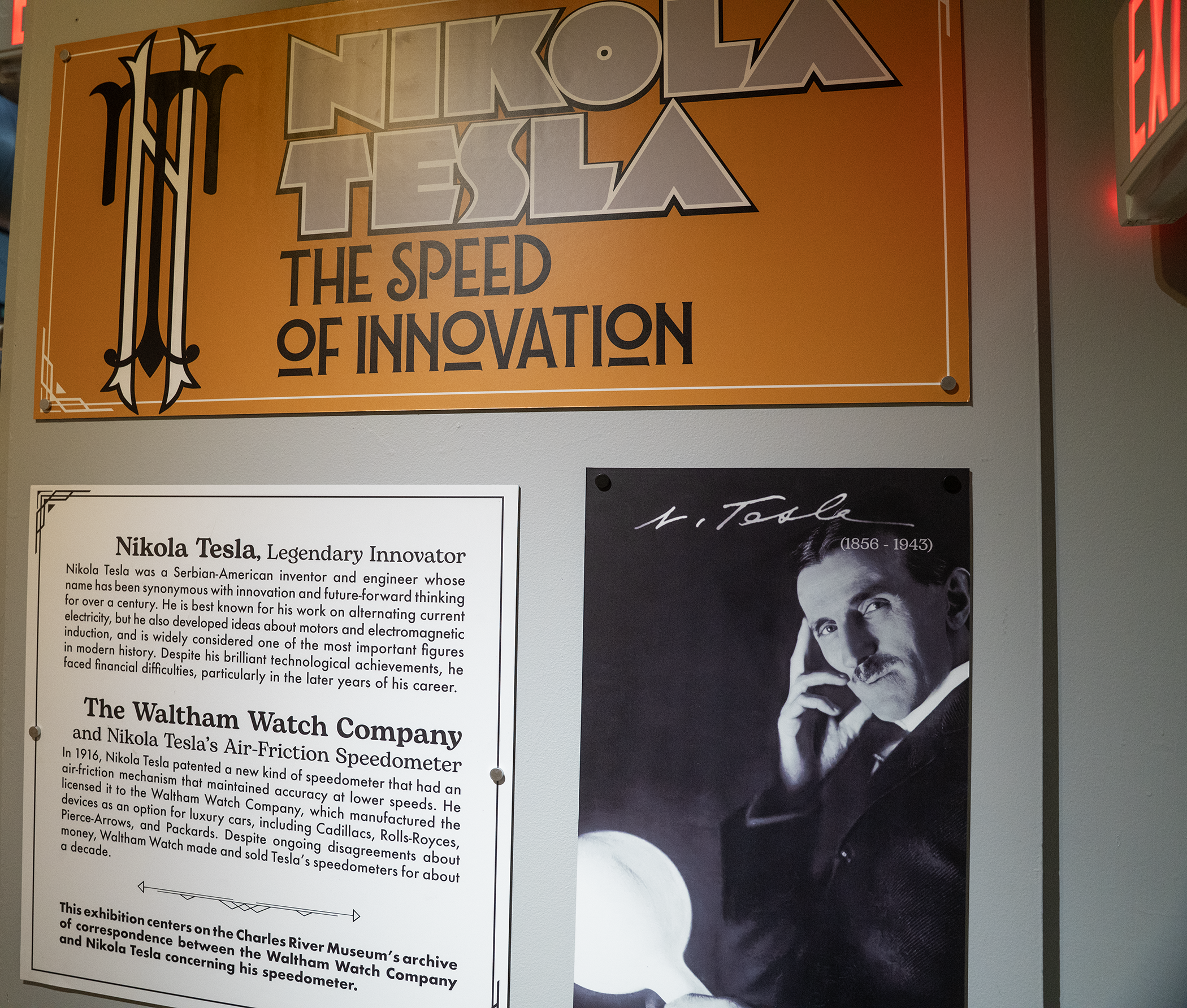
Nikola Tesla, Legendary Innovator
Nikola Tesla (1856 - 1943) was a Serbian-American inventor and engineer whose name has been synonymous with innovation and future-forward thinking for over a century. He is best known for his work on alternating current electricity, but he also developed ideas about motors and electromagnetic induction, and is widely considered one of the most important figures in modern history. Despite his brilliant technological achievements, he faced financial difficulties, particularly in the later years of his career.
The Waltham Watch Company and Nikola Tesla’s Air-Friction Speedometer
In 1916, Nikola Tesla patented a new kind of speedometer that had an air-friction mechanism that maintained accuracy at lower speeds. He licensed it to the Waltham Watch Company, which manufactured the devices as an option for luxury cars, including Cadillacs, Rolls-Royces, Pierce-Arrows, and Packards. Despite ongoing disagreements about money, Waltham Watch made and sold Tesla’s speedometers for about a decade.
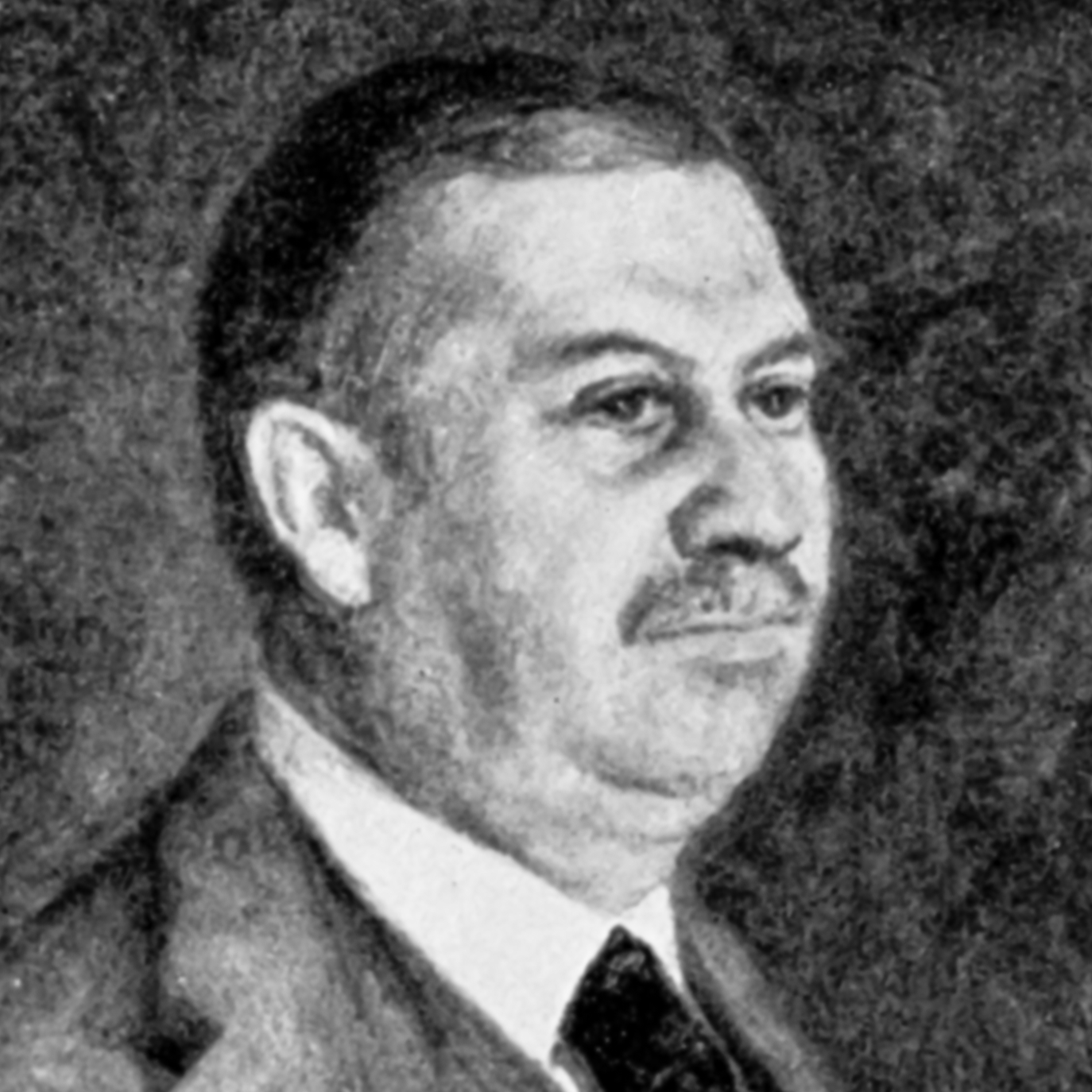
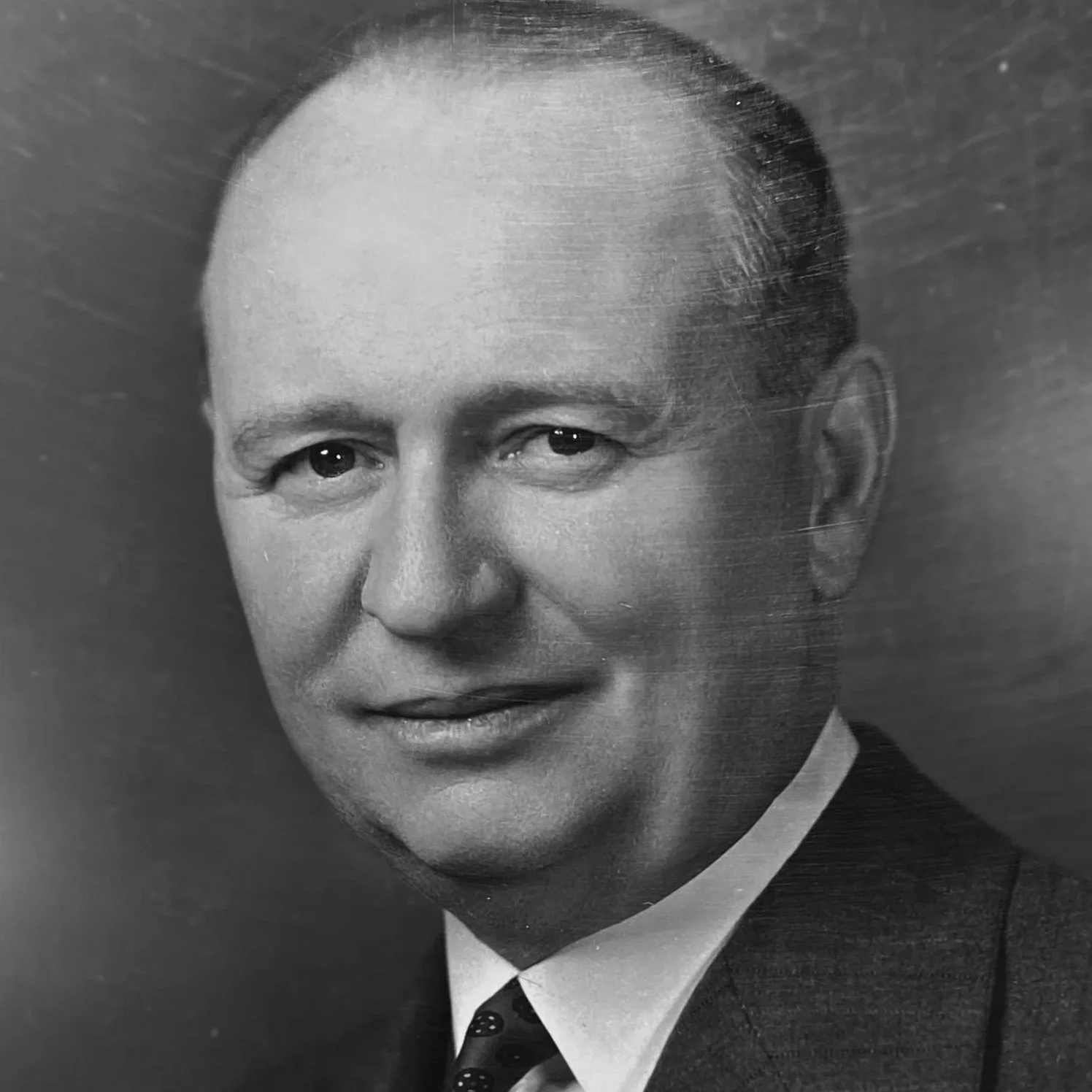
Top: Frederic C. Dumaine, Sr., (1866-1951), President and Treasurer
Bottom: I.E. Boucher, (1886-1957), General Manager
Dumaine portrait: Timing a Century, History of the Waltham Watch Company, by Charles W. Moore, D.C.S, Harvard University Press, 1945. Boucher photo: courtesy of Ed Simmons
“Apparently, we have not been able to manufacture cheaply enough to compete successfully and obtain any volume of business.” — I.E. Boucher, Waltham Watch Co., April 18, 1928
“There is no device of this kind in existence which is simpler and cheaper to construct.” — Nikola Tesla, April 22, 1928
“We appreciate your optimism about the successful years during the life of the patent; but you seem to lose sight of the actual facts regarding speedometers today. Speedometers are being sold for about $2.00.” — I.E. Boucher, Waltham Watch Co., April 30, 1928
“I have already concluded agreements with certain large automobile manufacturers and am quite convinced that if you saw your way clear of adopting the suggestion I have made, a great success would be achieved. — Nikola Tesla, May 28, 1928
“Any attempt by any other concern to manufacture and sell the patented speedometers without a license from us will be promptly met by a suit for infringement.” — Frederic C. Dumaine, Waltham Watch Co., June 9, 1928
“If we are not met half way in this friendly endeavor, we shall have to resign ourselves regretfully to the inevitable and settle our differences with your successors in the Courts.” — Nikola Tesla, May 20, 1929
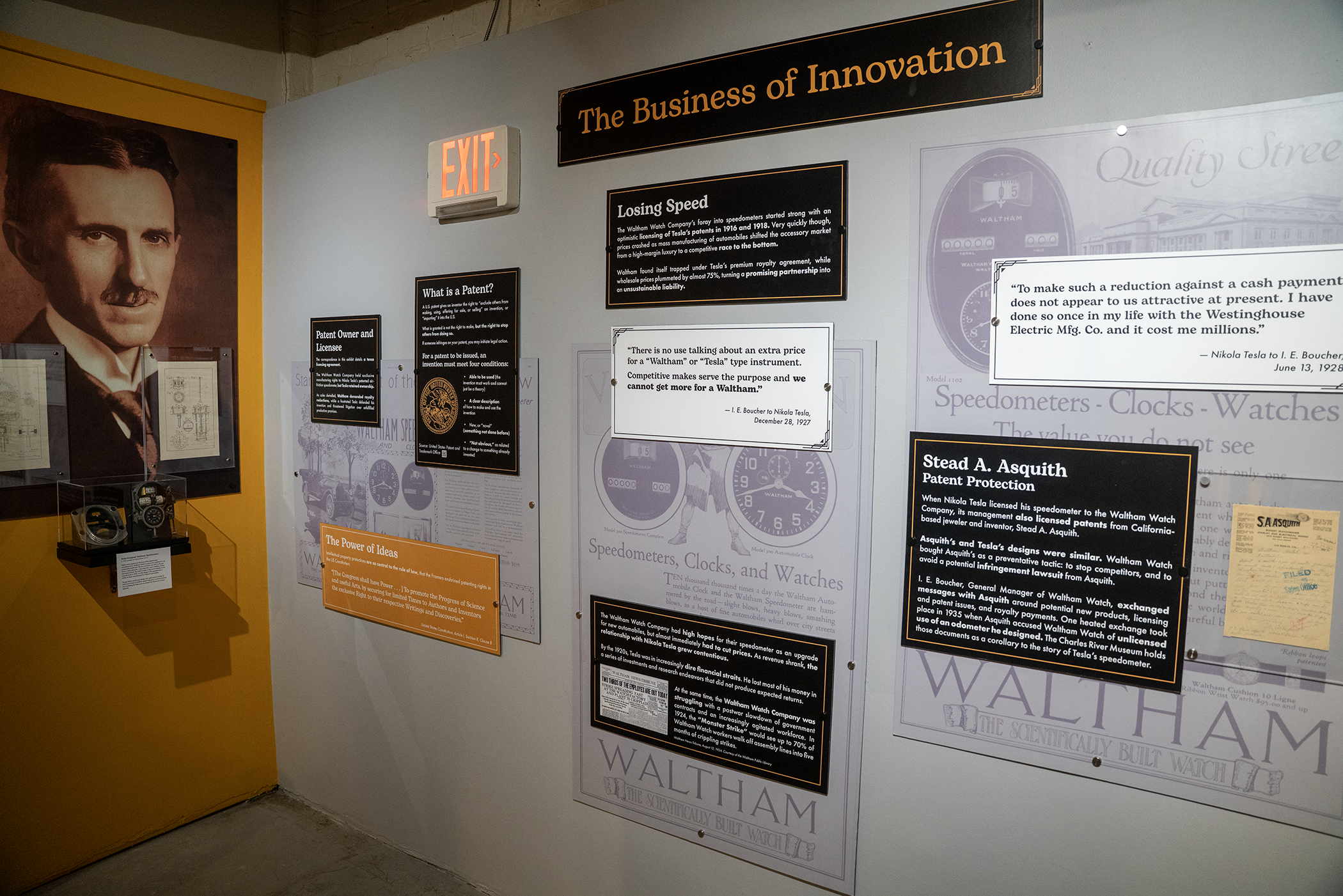
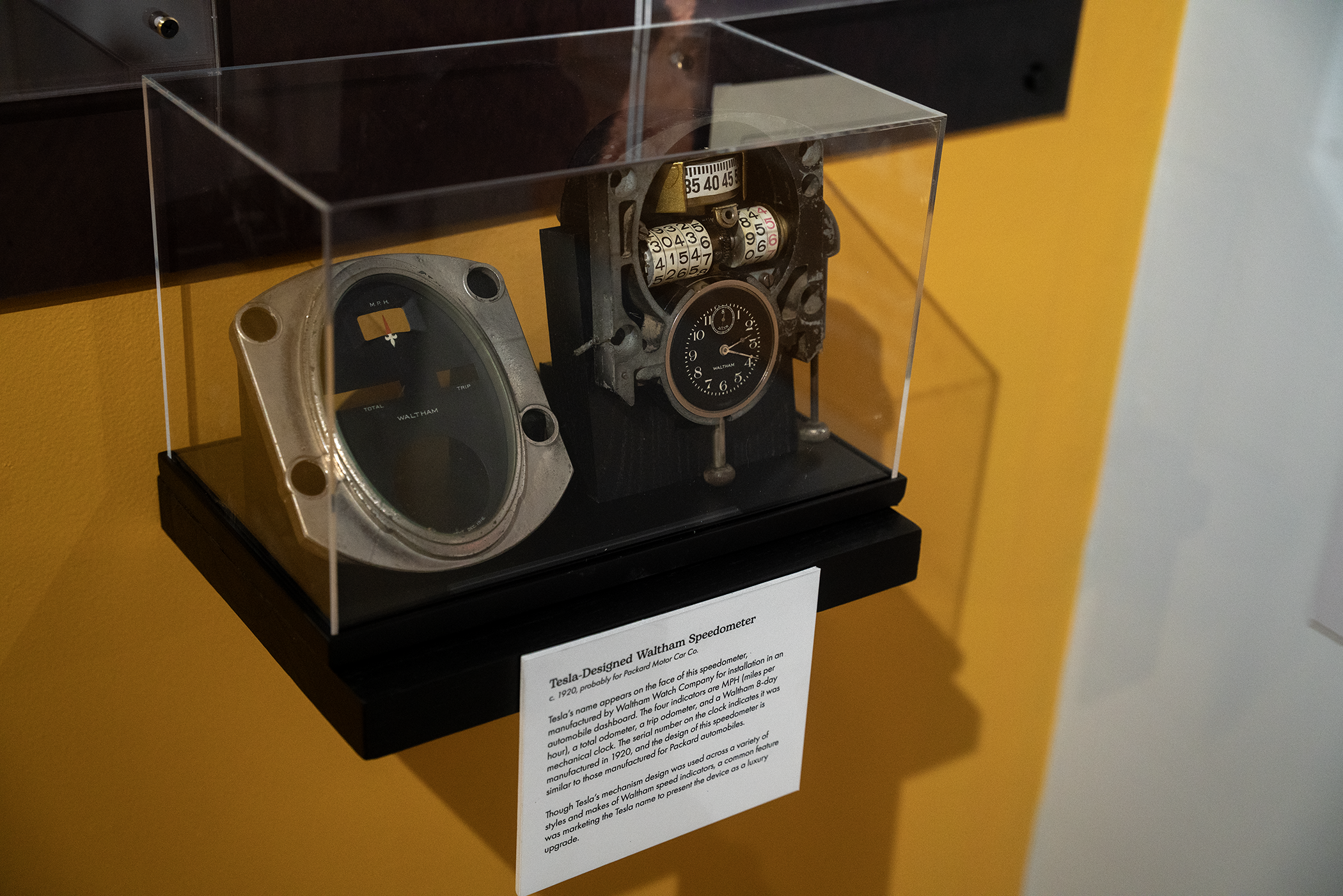
Press for “Nikola Tesla: The Speed of Innovation—
Charles River Museum's Tesla exhibit asks: Who owns an idea? Axios.com, Jul 13, 2026 A new exhibition at the Charles River Museum of Industry & Innovation explores the historic — and at times strained — partnership between inventor Nikola Tesla and the Waltham Watch Company. Why it matters: "Nikola Tesla: The Speed of Innovation" revisits a question that still shapes innovation today: Who owns and profits from an idea?
Charles River Museum exhibit shows Nikola Tesla as fraught businessman The Waltham Times, July 20, 2026 “ ‘Nikola Tesla: The Speed of Innovation’ takes a narrower approach than most Tesla retrospectives, focusing tightly on one business dispute: a years-long correspondence between Tesla and Waltham Watch, concentrated around the late 1920s. Originally, the company had acquired a patent for Tesla’s innovative and cost-effective air friction speedometer.”
Acknowledgements
The Charles River Museum would like to thank all of the staff, interns, volunteers and advisors that brought this exhibition to life.
In particular, our gratitude to:
Palig Mouradian, Joshua Echevarria, Lain Orndorff, Isaac Ward, Nicholas Adams, Ryan Spoering,
Chinloo Lama, Sal Lama, and the team at Dassault Systèmes SOLIDWORKS